
Stage 01
Achieved
Foundations built
The core TARS operator proposition, public site, inquiry path, journal, and framework shelf are already live.
This page is meant to read like a product roadmap or investor roadmap, not a vague promise page. It shows the milestones already achieved, the current phase under active execution, the next phase after that, and the later productization path still waiting for proof.
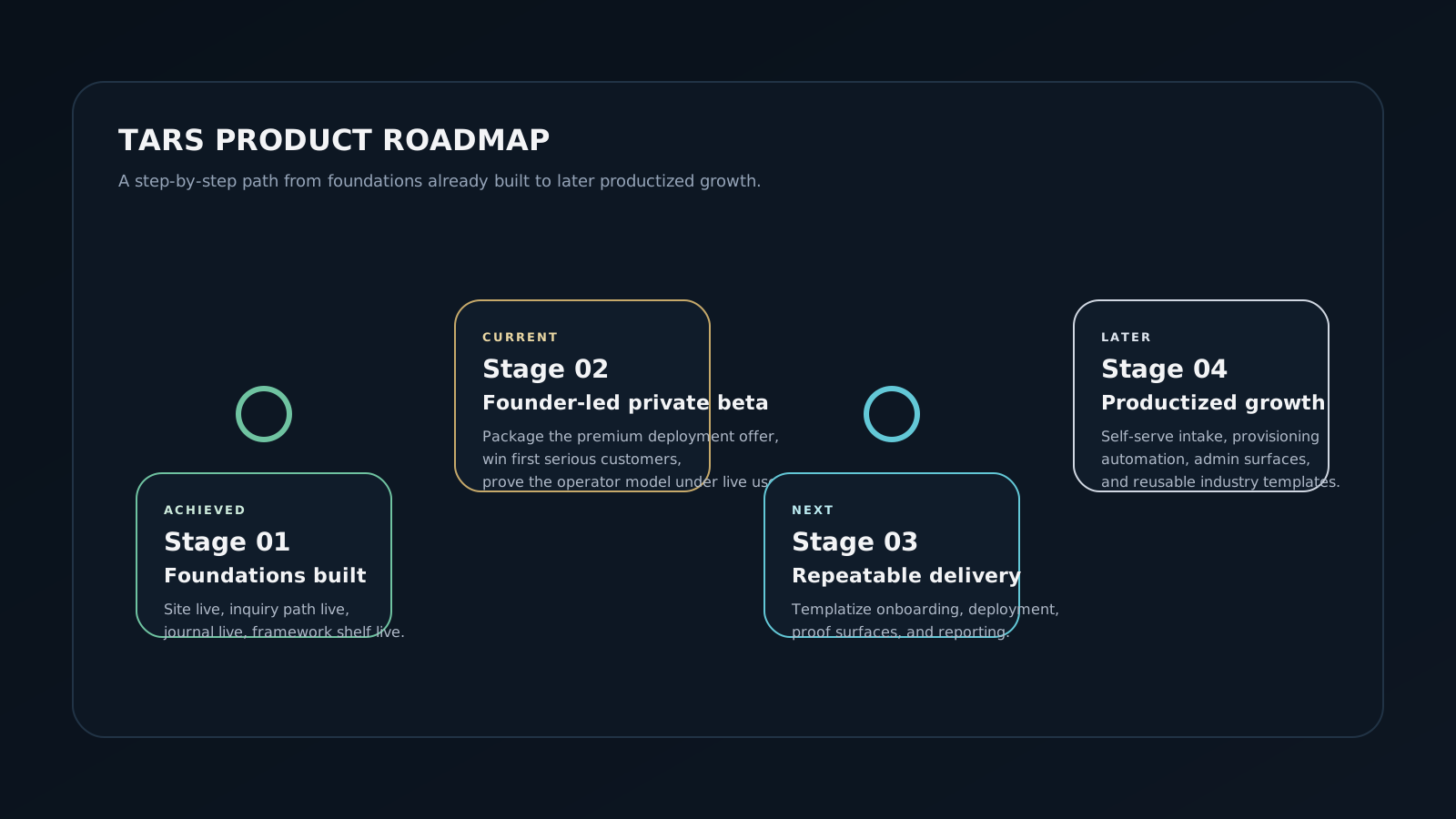
TARS is not trying to leap straight from concept to mass product. The current path is deliberate: first prove the operator model, then make delivery repeatable, then productize what earns the right to scale.
The core TARS operator proposition, public site, inquiry path, journal, and framework shelf are already live.
Turn TARS into a premium private deployment offer, win the first small set of serious customers, and prove what the model does under live use.
Templatize onboarding, tighten deployment scripts, add clearer use-case proof, and make the delivery lane more repeatable without flattening quality.
Add self-serve intake, provisioning automation, customer control surfaces, and reusable product layers only after the earlier phases demonstrate real demand and operating stability.
This is the foundational and interim work already crossed. The point is to make visible progress explicit instead of forcing visitors to infer it from scattered pages.
TARS already operates as a private AI operator with memory, tools, verification discipline, and direct task execution rather than a generic prompt-only assistant surface.
The homepage, capabilities, method, principles, FAQ, about page, inquiry page, and roadmap page are already deployed as one coherent public system.
TARS already has a dedicated library surface so reusable models and explanations are not trapped inside isolated essays.
The public site already follows static-first deployment, indexing hygiene, and verification-first publishing instead of pretending local edits are the same thing as live delivery.
The current objective is to prove TARS as a premium private deployment offer before trying to turn it into a broader productized system.
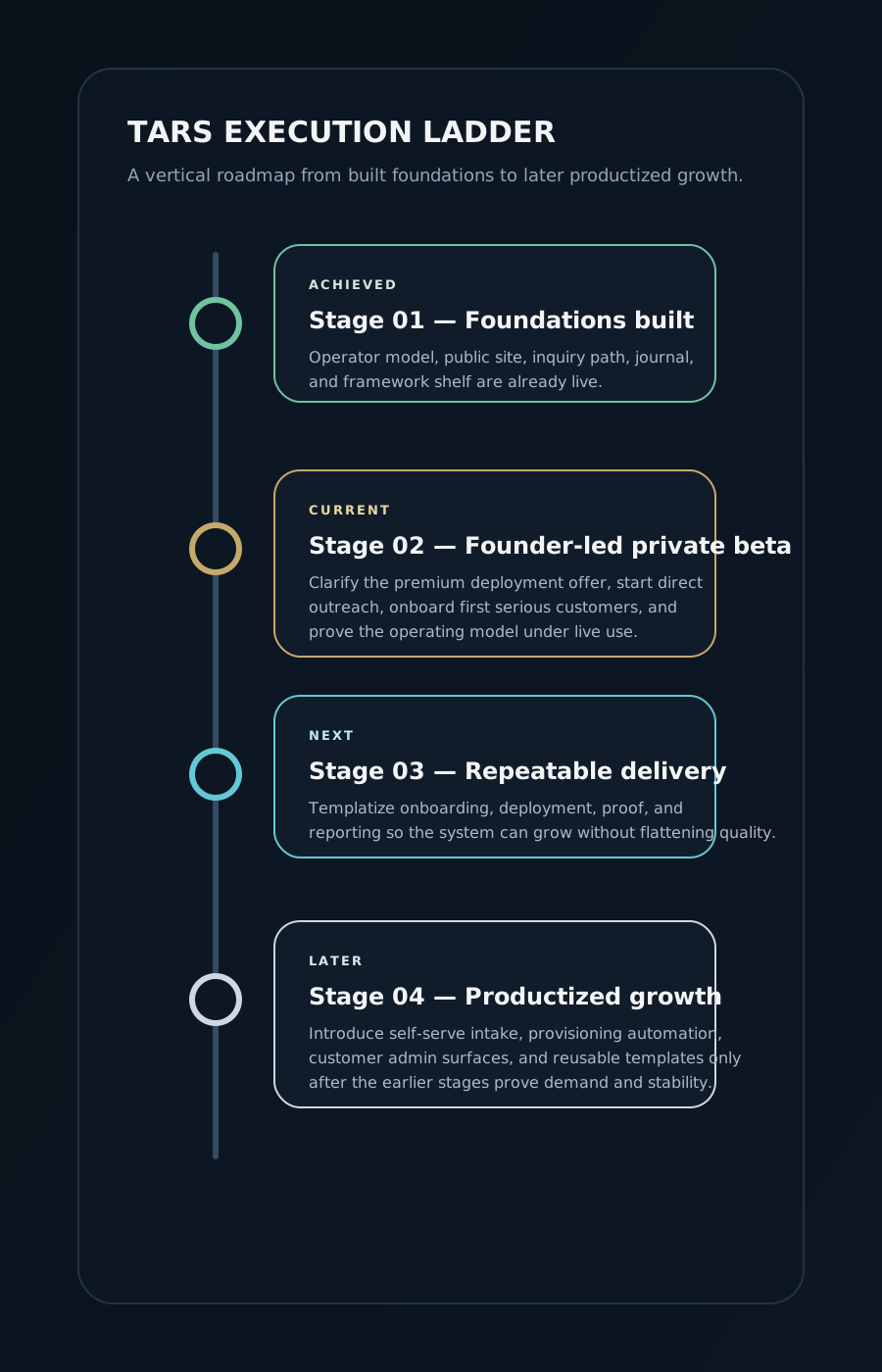
Once the private beta proves the shape of the offer, the next move is not mass scale. It is repeatability.
Tighten the path from enquiry to deployment so TARS can support more customers without losing quality or judgment.
This stage turns scattered wins into a system. It is the bridge between bespoke early traction and anything that deserves to be called productized.
The later roadmap is intentionally later. It exists, but it should only unlock after the earlier stages prove demand, fit, and operational stability.
Automation comes later because it should preserve the strengths of the operator model, not erase them in exchange for surface-level scale.
The founder-led and repeatable-delivery phases must show that customers want to keep TARS, not just trial it.
This is the short-horizon development and go-to-market push attached to the roadmap: not abstract strategy, but the next bounded tranche of work.
Open the method page, review the framework shelf, or start an inquiry if you already know where TARS could carry real business load.